Drop-Leaf Table vs Gateleg Table for a Tiny Dining Nook
A tiny dining nook has to do more than hold dinner plates. It may also be the route to the kitchen, the place where someone opens a laptop, or the landing zone for groceries that haven’t made it to the cupboard yet. In a small home, the question isn’t simply which table takes up less space. It’s which one works on an ordinary Tuesday, opens easily when guests arrive, and doesn’t turn the room into an obstacle course.
When comparing drop leaf vs gateleg tables, the biggest differences are how the leaves are supported, how much floor space the open table needs, and how comfortable the table is to sit at. Both can be smart choices. Both can also disappoint if you measure only the tabletop and forget chairs, legs, walkways, and the tightest turn from your front door to the nook.
I’ve helped prepare furniture deliveries through plenty of narrow Seattle stairwells and elevator doors. My jacket-pocket tape measure has taught me one reliable rule: measure the whole setup, not just the piece of furniture. Here’s how to choose with fewer surprises.
First, picture the table on a normal day
Before comparing table styles, be honest about how your nook is used. Does the table stay open for every meal, or does it need to fold away so someone can pass through? How many people sit there most days? How often do you actually host a larger group? A table that’s excellent for a holiday meal but awkward for daily breakfast may not be the right small-space table.
Small homes also collect overflow clutter: mail, school papers, reusable bags, packages waiting to be returned, and the occasional appliance that hasn’t found a cupboard. A folding table can create extra floor space, but it won’t make clutter disappear. Decide where the table will be stored or folded, and where everyday items will go instead of accumulating on the tabletop.
- For daily use: prioritize comfortable seating and enough clear space to pull chairs out.
- For occasional hosting: check the real open dimensions and plan where extra chairs will come from.
- For a shared walkway: consider whether the table can fold down without blocking a door or cabinet.
- For a work-and-dine nook: think about where a laptop, work supplies, and dining items go when the surface changes jobs.
Drop-leaf and gateleg tables: what’s the difference?
A drop-leaf table has one or more hinged sections that hang down when they aren’t in use. Raise a leaf and it rests on a support, such as a swing-out bracket or a leg. Some models have leaves on both sides; others have just one. In its compact form, a two-leaf drop-leaf table may be a narrow rectangle or console-like surface.
A gateleg table also has hinged leaves, but its support is part of the table’s leg structure. A set of legs swings out like a gate beneath a leaf. Depending on the design, the table may have one or two leaves and can open on one side or both. Many gatelegs fold into a slim shape, which is why shoppers often consider them for a tight nook or hallway.

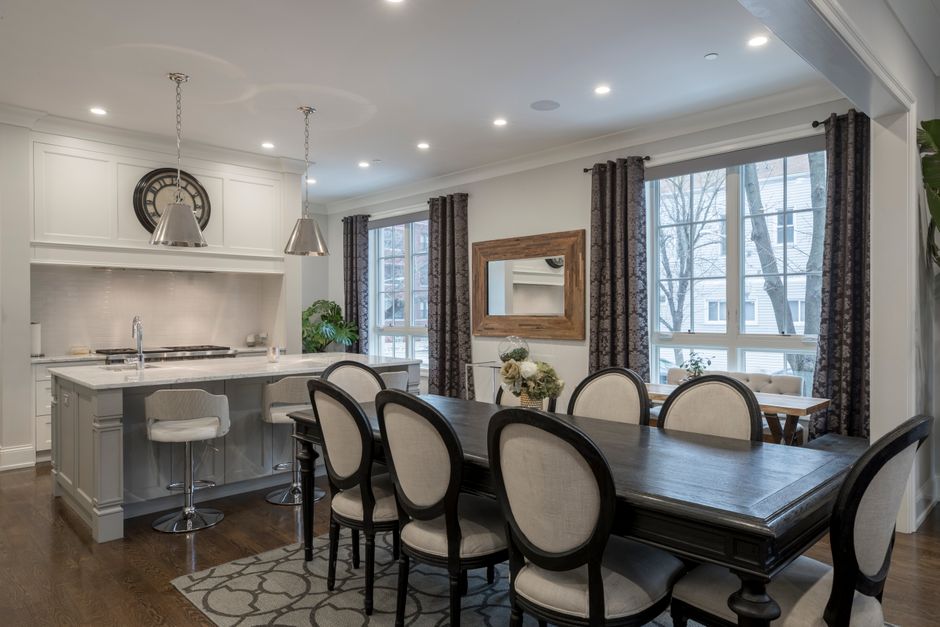
The names don’t guarantee a particular size, stability, or leg arrangement. Tables vary by maker, so inspect the actual mechanism and dimensions. The compact depth, open length, base shape, and chair arrangement matter more than the label on the product page.
Feature Drop-leaf table Gateleg table How the leaf is supported Brackets, a swing-out support, or a leg, depending on the model Legs swing out beneath the leaf as a gate-like frame Compact shape Can be shallow with one or both leaves down Often folds into a narrow profile, though the folded footprint varies What to check carefully Support strength, leg placement, and usable seating positions Gate-leg position, chair placement, and knee clearance Good fit when You want a straightforward leaf arrangement and a useful everyday size You need a compact profile and like the idea of swing-out supportsDrop-leaf tables: simple flexibility, with a few catches
Here's what kills me: a drop-leaf table can be a practical choice when you want to keep one side folded down most of the time and raise it for an extra place setting or a little more working surface. A one-leaf model may sit against a wall, then open toward the room for drop leaf table alternative a meal. A two-leaf version can give you several configurations, from a small central surface to a larger table.
What works well
- Flexible everyday footprint: You can raise only the leaf you need, if the design allows it.
- Easy-to-understand operation: Many drop-leaf mechanisms are simple to inspect and operate.
- Multiple uses: The compact version may work as a small dining surface, desk, or occasional serving table.
What can be tricky
Check what supports the leaf when it’s raised. A small bracket may be fine for ordinary dining, but don’t assume every model is suitable for leaning on or setting a heavy appliance on. Also check whether a raised leaf leaves room for someone’s knees. A support or table leg can land right where a diner’s legs need to go.
When one leaf is down, it may still project slightly from the table edge, depending on the design. The folded table’s advertised depth may not tell you whether there’s enough space to walk comfortably beside it. And if the table is pushed against a wall, confirm that you can raise the leaf without moving the whole piece.
Gateleg tables: compact profile, careful chair planning
A gateleg can be appealing when the main goal is a narrow folded footprint. With its leaves down, it may tuck close to a wall and leave more of the room open. When the legs swing out and the leaves rise, it can provide a larger dining surface without needing a separate extension leaf.
What works well
- Useful folding configuration: Depending on the model, one side can open while the other stays down.
- Integrated support: The swinging leg frame supports the leaf without relying on a small bracket alone.
- Potentially slim storage position: Many designs fold down neatly, but verify the actual folded dimensions.
Where the gateleg knee-space issue shows up
The gateleg knee space issue is one of the most important things to test before buying. When the leg frame swings under a leaf, it may occupy the very area where a chair or diner’s knees need to be. That doesn’t automatically make a gateleg uncomfortable, but it does mean that the number of people who can sit around it may be lower than the tabletop size suggests.
Check the open table from every planned seating position. Can a person sit at the end? Is there clear space for knees between the tabletop and the gate? Can a chair slide in without hitting a support? If you can, try the table in person with a chair similar to the one you’ll use at home. “Seats four” is not the same as “comfortably seats four with your chairs and your layout.”
Measure the whole dining setup, not just the table
Here’s where small-space regrets usually begin: someone measures the nook wall-to-wall, chooses a table that fits on paper, and then discovers there’s no room to sit down. A dining table needs breathing https://smoothdecorator.com/where-do-the-top-panels-go-when-you-take-them-off-a-game-table/ room for chairs and people moving around them. The exact clearance depends on the room, chair size, and whether the route is a main walkway, but these planning numbers are a useful starting point.
Measurement Useful planning starting point Why it matters Table edge to wall or obstacle About 36 inches where people need to sit and move behind a chair Allows room to pull out a chair and get past it; a tight, occasional-use spot may need less, but test it. Table edge to a wall with no chair Measure the actual walking route you need A table can sit closer where nobody needs to sit, but the route still needs to work. Chair width Measure your actual chair, including arms Dining chairs vary widely, and armchairs need more room. Open table footprint Use the manufacturer’s full extended length and depth Leaf size alone doesn’t tell you the space the table occupies. Walkway past the setup Check the route with chairs pulled out A clear aisle when the chairs are tucked in may vanish at mealtime.Use painter’s tape on the floor to mark the table in its everyday and fully open positions. Add the chair footprints, then pull the chairs back as if someone were sitting down. Walk the route from the kitchen and doorway. I always think through the tightest turn from curb to dining room, too: if your delivery path includes a narrow hall, stair landing, or elevator door, measure the table’s largest dimensions and folded shape before ordering.
- Measure the nook’s width and depth, including baseboards, radiators, trim, and door swings.
- Measure the table folded and fully open. Look for the real extended length, not just the tabletop length with leaves down.
- Mark where each chair sits and how far it needs to move back.
- Check knee room under the table, including supports, crossbars, and gate legs.
- Confirm the delivery route: doorway, hallway, stairwell turns, and elevator opening.
- Choose where the folded table or any loose components will live when not in use.
Don’t buy an extending table before planning leaf storage
Drop-leaf and gateleg tables usually keep their hinged leaves attached, but the broad category of extending tables also includes designs with separate leaves that need to be stored elsewhere. If you’re comparing a folding dining table small space shoppers might choose with a table that takes removable leaves, don’t treat storage as an afterthought. A leaf that lives behind a sofa, under a bed, or in a closet still needs a safe, accessible home.
Ask the seller whether the leaf stores inside the table or separately. If it’s separate, measure the leaf’s length, width, and thickness, and make sure you have a spot where it won’t warp, get scratched, or become impossible to retrieve. A table that expands beautifully but has a leaf with no sensible storage plan can become a source of overflow clutter rather than a space-saving solution.
Also get the actual dimensions in every configuration. Product listings sometimes give the closed size prominently and bury the expanded measurement. Before you buy, make sure you know:
- The tabletop dimensions with all leaves down.
- The full length and depth with each leaf raised or extension installed.
- The table’s height and the usable space between the apron and floor.
- Where separate leaves are stored and whether they’re included in the price.
- How much room is needed to open the mechanism safely.
Which one is right for your nook?
Choose a drop-leaf if you want a flexible daily surface, need to raise one side at a time, and find a model whose supports leave useful space for chairs. It can be especially handy when the table stays against a wall in its compact arrangement and opens toward the room for a meal.
Choose a gateleg if a slim folded profile is a priority and you’ve checked that its swinging supports won’t interfere with the seats you need. It can work well when you open it occasionally and have a clear place for the legs and chairs to land.
Neither style is automatically the winner. A well-sized drop-leaf can feel more practical than a gateleg that blocks knees; a thoughtfully designed gateleg can be more comfortable than a drop-leaf with awkward supports. Compare the specific tables, not just the category names.
A quick pre-purchase checklist
- Will the table work in its everyday configuration, not just when fully open?
- Does the open table leave room to pull out chairs and move through the nook?
- Have you checked knee clearance at every intended seat?
- Do you know the real extended length and the full open footprint?
- If there are removable leaves, have you picked a storage location?
- Can the table make the tightest turn from the delivery entrance to the dining room?
- Does the number of comfortable seats match the room—not just the product description?
For a tiny dining nook, the best drop leaf vs gateleg choice is the one that fits your daily routine without taking over the room. Measure the folded and open positions, test chair clearance, and give extra pieces a proper home. A few careful measurements now beat discovering at dinner that your “seats eight” table has room for the plates but not the people.