What Is a Realistic Price Range for a Pivot or Tilt Bathroom Mirror?
When remodeling a bathroom, the choice of mirror is far from a purely aesthetic decision. It involves functional considerations like shape, storage, mounting, and lighting integration. In particular, pivot and tilt bathroom mirrors bring adjustable hardware to the forefront, offering flexibility for users but also adding layers of complexity—and cost. In this post, we’ll break down the realistic price range for pivot and tilt mirrors, tying in key dimensions, lighting layout, and installation factors, referencing trusted industry resources and manufacturers like the National Kitchen & Bath Association (NKBA), Golden Lighting, and Lumens. We’ll also give practical advice on working with glaziers and electricians to ensure your mirrors function brilliantly and last in high-humidity environments.
Pivot and Tilt Mirrors: Functional Decisions Beyond Aesthetics
First, let's clarify what pivot and tilt mirrors entail and why they matter:
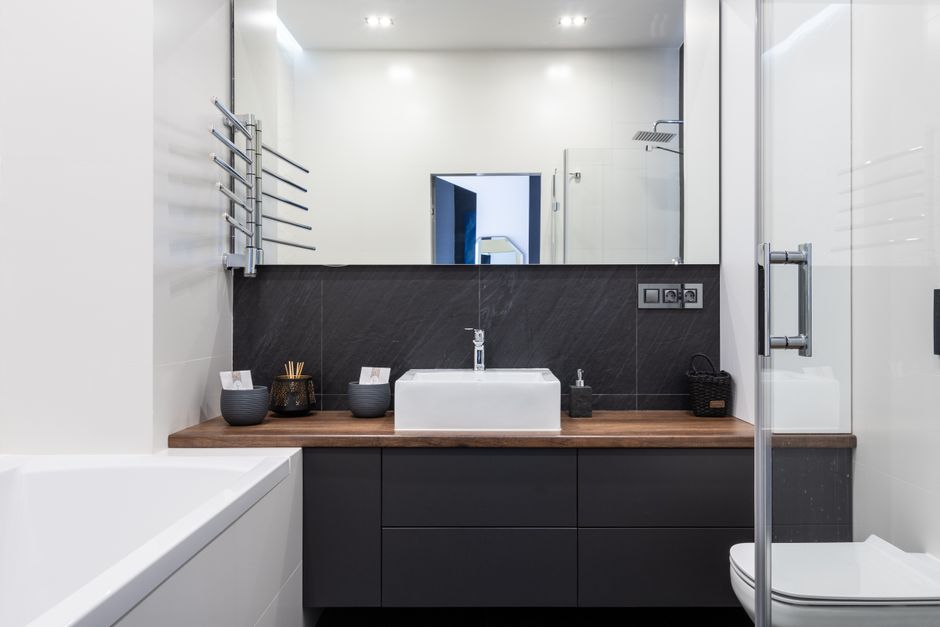
- Pivot mirrors rotate around a horizontal axis, allowing vertical adjustment for height and angle. This is great for accommodating users of different heights or for grooming tasks requiring different viewpoints.
- Tilt mirrors offer a fixed mount that can be angled forward or backward slightly, usually through adjustable brackets or hardware. They are less flexible than pivot mirrors but often simpler and more compact.
Choosing the right mirror hinges on intended use: is your priority shaving precision, makeup application, space-saving storage, or just ambient reflection? Each feature—and mounting choice—affects price points, sizing, and lighting compatibility.
Mirror Types and Features Impacting Cost
Understanding the variety helps set realistic expectations for budget allocation:
- Shape and Size: Rectangular and square mirrors are usually the most cost-effective, while unusual shapes or large custom sizes command premiums.
- Storage Options: Mirrors integrated into medicine cabinets or framed with shelving add materials and labor costs.
- Mounting Mechanisms: Adjustable hardware for tilt and pivot mirrors itself drives up price; expect costs for "adjustable mirror hardware" to span from $50 to $150 just for brackets and mounts.
- Lighting Integration: Backlit or front-lit LED mirrors are popular for task lighting but require upfront electrical planning and usually increase cost by 20-50% over a standard mirror.
Sizing Rules Tied to Lighting Layout
One of the biggest mistakes in bathroom mirror design is ignoring how glass size relates to lighting. The NKBA emphasizes sizing mirrors to between 75% and 100% of the vanity width to maximize reflection without cramping flanking sconces.
Here’s a practical sizing rule, keeping in mind task and ambient lighting:
- Measure your vanity width.
- Deduct at least 6 to 10 inches from the vanity width to allocate space for wall sconces or integrated vertical LED strips on either side.
- Choose a mirror width within the resulting dimension (typically 18-30 inches for single sinks).
- Adjust height considering average user eye level and sconce positioning; 36 to 42 inches tall is standard.
Remember: oversized mirrors crowding sconces reduce lighting quality and create glare issues. Lighting before mirror width is my cardinal rule.
Placement Heights and Sconce Spacing—Avoiding Common Pitfalls
Proper mirror height and sconce spacing make or break bathroom lighting effectiveness. For pivot/tilt mirrors, height is doubly important because adjustment range is limited.
- Mirror Height: Mount the mirror so the midpoint is roughly 60 to 65 inches from the floor, which aligns with average adult eye level. For pivot mirrors, ensure the top and bottom edges have clearance for unobstructed movement.
- Sconce Placement: Wall sconces should flank the mirror with the center of each fixture approximately 65 to 70 inches above the floor and about 28 to 36 inches apart, depending on mirror width.
- Clearance: Keep at least 2-3 inches of space between mirror edges and sconces to avoid cramped photos and uneven lighting.
Golden Lighting and Lumens both emphasize that task lighting near the face should be shadow-free, so symmetrical lighting at eye level is critical.
Task Lighting vs Ambient Lighting
Lighting types have distinct roles:
- Task Lighting: Bright, localized lighting at mirror height for grooming. Hardwired LED mirrors or fixtures providing 500 lux at the face work best here. These are often installed by an electrician to ensure proper feeds and integration.
- Ambient Lighting: General room illumination that fills space softly, often ceiling mounted or recessed. Complements but does not replace task lighting.
When ordering pivot or tilt mirrors with lighting, verify with your electrician if your junction box and wiring can support hardwired LEDs. Early coordination prevents last-minute surprises and costly retrofitting.

Realistic Price Range: Pivot Mirror $50 to $150 and Tilt Mirror Cost Breakdown
Mirror Type Price Range Components Included Notes Basic Pivot Mirror $50 to $150 Mirror glass, pivot brackets, wall anchors Standard glass, hardware only; no lighting or storage Mid-Range Tilt Mirror $100 to $300 Mirror, adjustable tilt hardware, quality frame Often framed; may include simple LED edge lighting Hardwired LED Pivot Mirror $250 to $600+ Backlit glass, adjustable hardware, integrated electronics Requires electrician for wiring; expensive but high functionThe wide spread reflects material quality, hardware sophistication, and lighting integration. Cheaper mirrors typically have basic pivot hardware shipped with standard glass, such as plate glass installed by your glazier after templating. More advanced tilt mirrors may be framed or use polished edges for a better look and durability.
Hardwired LED pivot mirrors ranked highest on durability and lighting quality but are at the top of the cost spectrum, influenced by electrician labor fees and complex hardware.
Working With Your Glazier and Electrician
Professional glaziers take precise templates of your mounting walls and vanities to cut and install plate glass mirrors accurately. This step is crucial in humidity-prone bathrooms to ensure smooth, sealed edges that resist water damage.
Electricians bring expertise when installing hardwired illuminated mirrors, round mirror 24 inch running feeds to junction boxes, and wiring dimmers or smart controls. Early involvement during planning avoids wiring hurdles behind finished walls.
Tip: Ask your glazier about sealing treatments and your electrician about dimmable LED modules when specifying high-end pivot or tilt mirrors from Golden Lighting or Lumens catalogs.
Verdict Summary
- Pivot mirror $50 to $150 for basic models, adjustable hardware is a key cost driver.
- Tilt mirror cost varies $100 to $300 for quality hardware plus frame, rising sharply with lighting integration.
- Hardwired LED mirrors require electrician coordination—add $250+ to base cost.
- Lighting must be prioritized before mirror width—spacing for sconces critical.
- Working with professional glaziers and electricians is essential for long-lasting, functional installations.
- Demister function recommended where humidity is severe; standard in many Golden Lighting/Lumens units.
Conclusion
Selecting a pivot or tilt bathroom mirror involves balancing price with function and installation complexity. Following NKBA sizing guidelines, prioritizing lighting layout, and coordinating with your glazier and electrician upfront will save money in the long term and improve user experience. Expect to spend between $50 and $150 for basic adjustable mirror hardware, with costs rising as you add lighting vanity lighting 1600 lumens or premium finishes. Avoid oversized mirrors that crowd lighting and plan for task illumination first. With these strategies, your bathroom mirrors will perform optimally for years to come.